
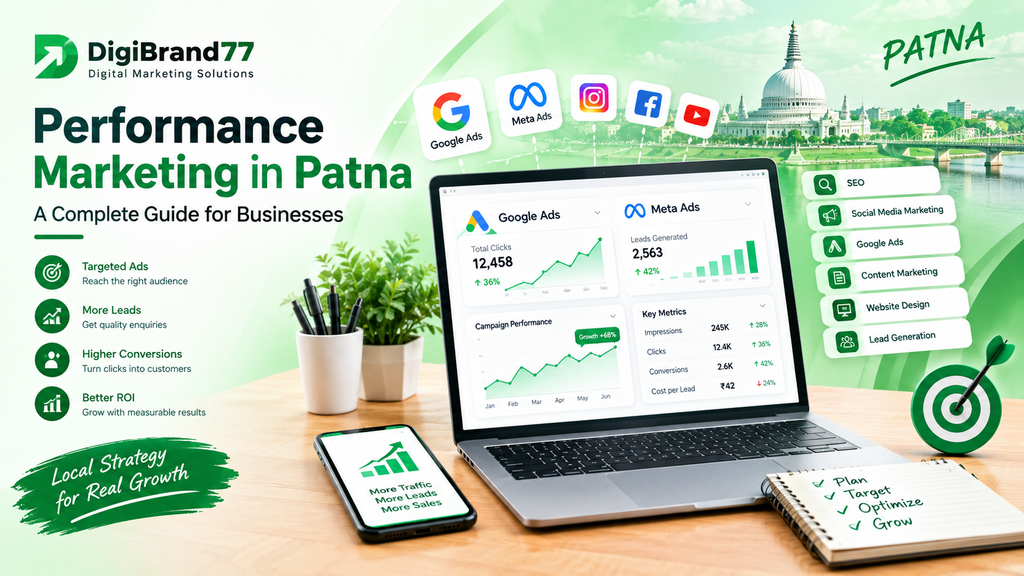
Performance Marketing in Patna: A Complete Guide for Businesses
Introduction
In today’s competitive digital world, businesses need more than just an online presence to attract customers and increase sales. They need marketing strategies that help them reach the right audience, generate quality leads, and measure results. This is where performance marketing becomes important.
Performance Marketing in Patna helps local businesses promote their products and services through measurable digital campaigns. Whether you run a startup, retail store, educational institute, real estate company, healthcare business, or online store, performance marketing can help you connect with potential customers through targeted advertising and data-driven strategies.
Unlike marketing approaches that focus mainly on visibility, performance marketing emphasizes measurable outcomes such as clicks, leads, enquiries, purchases, and conversions. Businesses can track campaign results and adjust their strategies based on performance.
At DigiBrand77, we believe every business needs a marketing strategy aligned with its goals, audience, and budget. In this guide, you will learn what performance marketing is, why it matters, which channels to use, and how businesses in Patna can build effective campaigns.
1. What Is Performance Marketing and How Does It Work?
Performance marketing is a digital marketing approach that focuses on measurable actions and results. These actions may include website visits, form submissions, phone enquiries, app downloads, product purchases, or other conversions that matter to a business.
Businesses use platforms such as Google Ads, Meta Ads, and other digital advertising channels to reach their target audiences. Campaign performance is monitored using analytics and conversion tracking.
For example, a coaching institute in Patna may run Google Ads targeting students searching for coaching classes. By tracking calls, enquiry forms, and admission-related leads, the institute can understand which campaigns are generating useful enquiries.
A typical performance marketing process includes:
- Goal setting: Decide whether you want leads, sales, enquiries, or website traffic.
- Audience targeting: Reach people based on relevant interests, search queries, location, or other permitted targeting signals.
- Campaign creation: Develop advertisements, landing pages, and suitable offers.
- Tracking and measurement: Measure clicks, conversions, cost per lead, and return on ad spend where appropriate.
- Optimization: Improve targeting, creatives, landing pages, and budgets based on campaign data.
The key benefit is that businesses can make better-informed marketing decisions using measurable results instead of relying only on assumptions.
2. Why Performance Marketing Is Important for Patna Businesses
Patna has businesses across education, retail, healthcare, real estate, hospitality, professional services, and e-commerce. Digital advertising gives these businesses another way to connect with customers who are actively searching for relevant products or services.
Here are some reasons businesses may benefit from performance marketing.
Reach the Right Audience
Target campaigns toward people who are more likely to need your products or services. Local targeting can help businesses focus on Patna and relevant surrounding areas.
Generate Quality Leads
Use targeted advertisements and relevant landing pages to encourage potential customers to call, submit an enquiry, or request more information.
Track Marketing Results
Measure campaign spending alongside enquiries, sales, and conversions to understand what is working.
Control and Adjust Budgets
Start with a suitable test budget, assess performance, and adjust spending based on results. Actual costs and outcomes depend on competition, audience, offer, and campaign quality.
Improve Brand Visibility
Consistent, relevant advertising can introduce your business to potential customers and help them discover your services.
For businesses in Patna, the goal should be to attract the right customers and generate meaningful business outcomes—not simply to increase clicks.
3. Top Performance Marketing Channels for Business Growth
Choosing the right channels depends on your business model, audience, objectives, and available budget. These are some common performance marketing channels to consider.
Google Ads
Google Ads can help businesses reach people searching for specific products or services. Search campaigns are particularly useful when potential customers already have a clear need.
For example, a business offering website design services can target relevant search terms and direct visitors to a dedicated service page.
Facebook and Instagram Ads
Meta advertising can help businesses introduce their products, promote offers, generate enquiries, and reconnect with eligible audiences who have previously interacted with their brand.
High-quality images, short videos, compelling messages, and clear calls to action can help improve campaign relevance.
Landing Page Optimization
A landing page is where visitors arrive after clicking an advertisement. It should clearly explain the offer, show relevant benefits, build trust, and make it easy for users to enquire or purchase.
A campaign may receive many clicks but generate few leads if the landing page is confusing or slow.
Remarketing
Remarketing can help you reconnect with eligible people who previously visited your website or interacted with your business. Campaigns must follow applicable privacy requirements and platform policies.
Conversion Tracking and Analytics
Tools such as Google Analytics and advertising-platform tracking help businesses understand what visitors do after clicking an advertisement. Correct setup is essential for reliable campaign measurement.
A balanced strategy uses channels that match your customers’ behavior rather than advertising everywhere without a clear purpose.
4. How to Create a Result-Driven Performance Marketing Strategy
A successful campaign starts with a clear plan. Before investing in advertisements, define what you want to achieve and how you will measure success.
Step 1: Define Your Business Goals
Choose a specific objective, such as generating qualified leads, increasing online sales, or receiving more service enquiries. Your objective will influence campaign selection and measurement.
Step 2: Understand Your Target Audience
Identify your ideal customers, their needs, their location, and the problems your business solves. Use this information to develop relevant messaging and offers.
Step 3: Research Keywords and Competitors
For search advertising, research the terms potential customers use when looking for your services. Review competitors’ messaging and offers to identify ways your business can stand out.
Step 4: Create Relevant Advertisements
Write clear headlines and descriptions that explain your service and its benefits. Use suitable visuals and a direct call to action, such as “Get a Quote,” “Book a Consultation,” or “Enquire Today.”
Step 5: Build a Strong Landing Page
Ensure your landing page matches the advertisement. Include essential information, proof of credibility where available, contact options, and a simple enquiry process.
Step 6: Set Up Conversion Tracking
Track valuable actions, such as completed forms, qualified phone calls, or purchases. Check that conversions are configured correctly before using the data to make budget decisions.
Step 7: Test and Optimize
Compare different advertisements, audiences, keywords, and landing pages. Pause underperforming elements when the data supports doing so, and invest more carefully in campaigns producing valuable outcomes.
This structured approach helps businesses improve campaigns over time rather than expecting immediate success from advertising alone.
5. How Performance Marketing Helps Generate Quality Leads and Sales
Lead generation is an important goal for many service-based businesses. However, not every click or enquiry becomes a customer. The quality of leads matters as much as their quantity.
Performance marketing can support lead generation through several methods.
- Target relevant searches and audiences.
- Use advertisements that communicate a clear and accurate offer.
- Direct users to dedicated landing pages.
- Make phone calls and enquiry forms easy to access.
- Follow up with enquiries promptly.
- Track which campaigns generate qualified leads and actual sales.
For example, a real estate company in Patna could create separate campaigns for different property categories. Each campaign could lead to a relevant page with property details and an enquiry form.
The company could then assess how many enquiries were qualified, how many site visits were arranged, and how many sales resulted.
This helps businesses look beyond the number of leads and evaluate whether their marketing contributes to genuine growth.
6. How to Measure Performance Marketing ROI and Campaign Success
Measuring results helps businesses understand whether their marketing investment is producing value. The right metrics depend on campaign goals and the type of business.
| Metric | What it measures |
|---|---|
| CPC (Cost Per Click) | Average cost for each advertising click |
| CPL (Cost Per Lead) | Average cost to generate a lead |
| Conversion Rate | Percentage of visitors who complete a desired action |
| CPA (Cost Per Acquisition) | Average cost of acquiring a customer or conversion, depending on the definition used |
| ROAS (Return on Ad Spend) | Revenue attributed to advertising compared with advertising spend |
| ROI (Return on Investment) | Return relative to the overall investment and costs included |
For example, if you spend ₹10,000 on advertising and generate ₹40,000 in attributed sales revenue, your ROAS is 4×, or ₹4 in revenue for every ₹1 spent on advertising. This does not mean your profit is ₹30,000, because product costs, salaries, taxes, and other expenses may still apply.
Businesses should evaluate campaign performance alongside lead quality, conversion rates, customer lifetime value, and actual profitability wherever possible.
7. Common Performance Marketing Mistakes to Avoid
Even well-planned campaigns can underperform when important details are overlooked. Avoid these common mistakes:
- Running ads without clear goals: Decide what a successful campaign should achieve before launching it.
- Targeting the wrong audience: Use relevant targeting and review the quality of incoming leads.
- Ignoring landing pages: Make sure the page is clear, fast, mobile-friendly, and relevant to the advertisement.
- Tracking clicks only: Monitor meaningful conversions and business outcomes.
- Changing campaigns too frequently: Allow enough time and data to evaluate performance appropriately.
- Using misleading offers: Keep advertisements accurate and consistent with your actual products or services.
- Ignoring follow-ups: A slow response to enquiries can reduce the likelihood of converting interested prospects into customers.
Avoiding these mistakes can make campaign evaluation more reliable and help businesses use their marketing budgets more effectively.
Conclusion
Performance marketing gives businesses a practical way to promote their products and services while measuring campaign results. By choosing suitable advertising channels, understanding your audience, optimizing landing pages, and tracking meaningful conversions, businesses in Patna can make more informed marketing decisions.
However, successful performance marketing requires continuous testing, realistic expectations, and a focus on business outcomes—not just clicks or impressions.
With a clear strategy and consistent optimization, businesses can work toward generating quality leads, improving sales opportunities, and building sustainable growth.
Ready to grow your business online? Connect with DigiBrand77 to explore digital marketing solutions tailored to your business goals.